How to Shut Off Gas After an Earthquake Safely?
Last Updated: October 30, 2026
Quick Summary
First make sure everyone is safe, then shut off gas only if you smell gas, hear hissing, or see damage and can reach the meter safely. To shut it off, turn the manual valve a quarter turn so the handle sits across the pipe, then leave and call your gas utility.
- Drop, cover, and hold on until the shaking stops, then check for injuries.
- Never use a match, lighter, light switch, or appliance if you smell gas.
- Do not shut off gas just because the ground shook without signs of a leak.
- Gas is off when the valve handle sits perpendicular to the pipe.
- An automatic seismic valve does not replace knowing where your manual valve is.
Table of Contents
- Immediate Safety Actions Before You Touch the Meter
- Decision Tree: Should You Shut Off the Gas?
- How to Turn Off Natural Gas at the Meter
- What to Do If You Smell Gas After an Earthquake
- Earthquake Gas Shut-Off Valves: How Automatic Devices Differ
- How to Reset a Gas Shut-Off Valve and Restore Service
- Preparing Your Household to Shut Off Gas Quickly
- Frequently Asked Questions
Immediate Safety Actions Before You Touch the Meter
Shutting off gas after an earthquake is a real safety step, but it should never be the first thing you do. Drop, cover, and hold on until the shaking stops. Then check yourself and the people around you for injuries before you go near any utility.
Once you are safe, look for signs of danger inside the home. Listen for hissing, and smell for gas. Check for broken glass, fallen shelves, and damaged walls.
Watch out: Do not light a match, use a lighter, flip a light switch, or plug in an appliance if you smell gas. Sparks can ignite a leak. Leave the building first, then call for help from outside.
Wear shoes and keep a flashlight handy. Broken glass and debris often sit near the meter. Stay alert for aftershocks, which can cause new damage.
Decision Tree: Should You Shut Off the Gas?
Do not shut off gas just because the ground shook. Shut it off only when there is a clear sign of a problem and you can reach the meter without putting yourself in danger. The decision below is ordered by safety, not by convenience.
Step 1, Are you and your household safe? Drop, cover, and hold on until the shaking stops. Check for injuries. If anyone is hurt or trapped, call emergency services first. Do not go near the meter until people are accounted for.
Step 2, Do you smell gas, hear hissing, or see damage? From where you are, listen for a steady hiss and smell for the rotten-egg odor added to natural gas. Look for a broken or separated gas line, a tilted meter, or debris on the piping. If any of these are present, move to Step 3.
Step 3, Can you reach the meter safely? The meter must be reachable without walking through the odor, without stepping over downed power lines, and without moving heavy debris. If the meter is in a basement that smells strongly of gas, do not enter.
Step 4, Shut off the gas and leave. If the meter is safe to approach, turn the valve a quarter turn so the handle sits across the pipe (see the valve section below). Then leave the building, move to an open area, and call your utility. Do not re-enter until a professional clears the property.
Step 5, No smell, no sound, no visible damage? Leave the gas on. Turning gas back on usually requires a utility visit or a qualified technician. Monitor for aftershocks and re-check for leaks after each significant shake.
Step 6, Unsure? Call your gas utility's emergency line and describe what you see and smell. They can tell you whether to shut off or evacuate. When in doubt, err toward leaving the building rather than toward touching the meter.
Use the decision tree above to decide whether shutting off gas is necessary when there is no evidence of a leak.
How to Turn Off Natural Gas at the Meter
Turning off natural gas at the meter is a simple task once you know where to look. Work slowly and stay calm.
Locating the Gas Meter and Manual Shutoff Valve
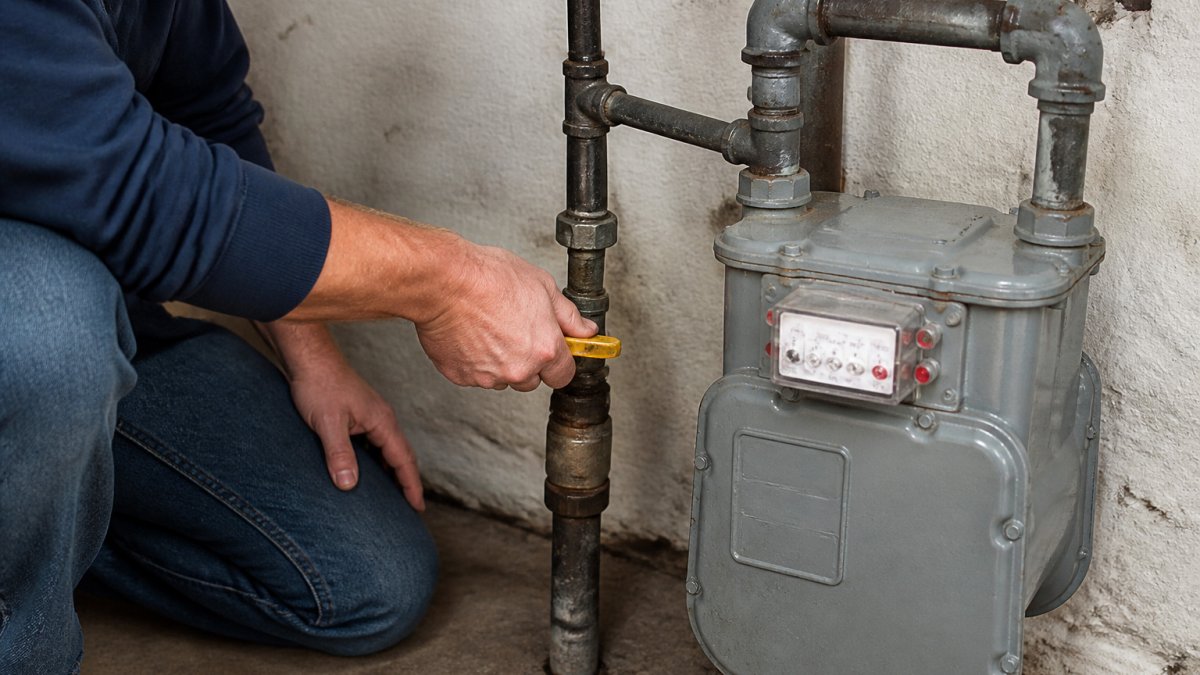
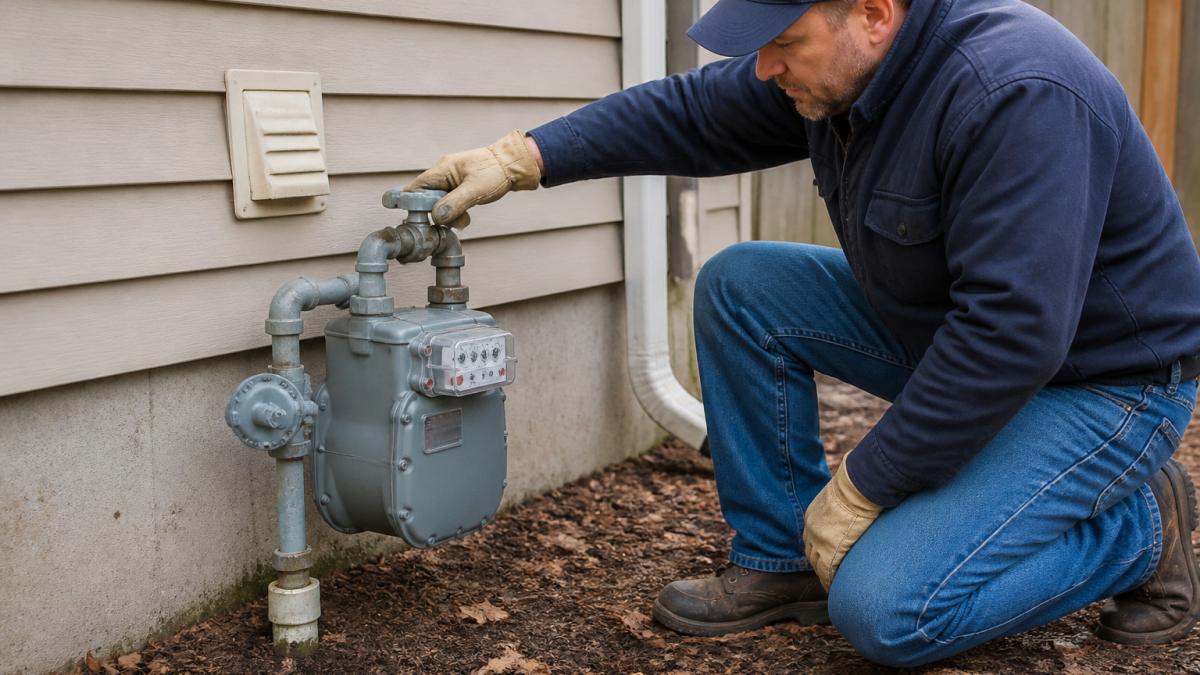
The gas meter is usually outside the home, on an exterior wall, or near the basement. The manual shutoff valve is typically on the pipe just before or after the meter. It is often a yellow or gold handle.
!A homeowner in a work glove kneeling beside an outdoor gas meter on a residential wall, one hand resting on the valve handle, daylight, realistic setting
Positioning the Valve Handle to Stop Flow
Grip the valve handle and turn it a quarter turn, so it sits perpendicular to the pipe. When the handle is across the pipe, the gas is off. When it runs along the pipe, the gas is on.
Use a wrench only if the handle is stuck. Turn the wrench gently. Forcing it can damage the valve or the pipe.
The steps below summarise how to find the valve and close it safely.
| Step | What to do | Note |
|---|---|---|
| Locate meter | Find the gas meter, usually outside or near the basement | Manual valve is on the pipe before or after the meter |
| Identify valve | Look for the manual shutoff valve, often a yellow or gold handle | Typically just before or after the meter |
| Turn the handle | Turn it a quarter turn so it sits perpendicular to the pipe | Gas is off when the handle is across the pipe |
| Use a wrench | Only if the handle is stuck; turn gently | Forcing it can damage the valve or pipe |
What to Do If You Smell Gas After an Earthquake
If you smell gas, act fast but stay calm. Open a door or window on your way out if it is safe to do so. Leave the home and move to an open area away from the building.
Shut off the gas at the meter only if you can reach it without walking through the odor or near damaged wires. Then call your gas utility's emergency number from a safe distance. Stay out until a professional confirms the area is safe.
Many households skip this step and go back inside too early. Our water outage and contamination preparedness guide covers the rest of the post-quake utility checklist, including safe water reserves. A small leak can still build up in an enclosed space.
Earthquake Gas Shut-Off Valves: How Automatic Devices Differ
Some homes have an automatic seismic gas shutoff valve installed at or near the meter. These devices are designed to close the gas supply when they detect strong ground motion, but they are not a substitute for knowing how to operate the manual valve.
How they work. Seismic gas shutoff valves are designed to close when strong ground motion is detected. Check your device's manufacturer label for how it operates and how it is reset.
How to tell if it has closed. Look for a reset lever, a pull ring, or an indicator on the device, and check the manufacturer's label for how your model shows it has tripped. If you are unsure, do not assume the valve is open. Check the manufacturer's label on the device, which usually includes reset instructions.
How they differ from excess flow valves. An excess flow valve is a separate device that restricts flow when it senses an abnormally high rate, such as a broken line. It does not close because of earthquake shaking alone. A home can have one, the other, both, or neither. Knowing which you have matters: an excess flow valve will not protect you from a slow leak at a fitting, and a seismic valve will not help if the piping downstream of it is damaged.
Limits you should plan around. A seismic valve protects the supply at its location. It does not detect leaks inside the home, it does not relight appliances, and it does not tell you whether the system is safe. Some valves may require professional resetting, and local rules may govern who can restore service. Do not rely on an automatic valve alone; know where your manual valve is and how to turn it.
If your valve has closed and you are not trained to reset it, call your gas utility. Restoration is not just a matter of flipping a lever; it is a check that the system downstream is intact.
How to Reset a Gas Shut-Off Valve and Restore Service
Restoring gas is different from shutting it off. Do not restore service yourself unless you are trained and your utility has told you it is safe.
Utilities generally send a technician to check the system before restoring service. If your seismic valve has closed, follow the reset steps printed on the device, or call your utility for help.
Never attempt to relight pilot lights or appliances until a professional has inspected the system.
Preparing Your Household to Shut Off Gas Quickly
Preparation makes a stressful moment easier. Walk through your home now, while you are calm.
- Find your gas meter and manual shutoff valve. Mark them with a bright label.
- Keep a wrench or the correct tool near the meter, stored where you can reach it.
- Note your gas utility's emergency phone number and post it near the meter and on your fridge.
- Teach every adult in the home how to shut off the gas safely.
- Review your plan with children and older relatives, and plan for anyone with limited mobility.
Plan for pets and medications as well. If you need to evacuate, have a grab bag ready and a meeting point outside the home. Our household evacuation preparedness guide helps you decide where to go, when to leave, and what to take.
Being ready is part of staying safe. Our power outage preparedness guide covers planning for long outages, food and medication, and safe backup power. Take a few minutes this week to walk through these steps with your household.
Frequently Asked Questions
Should I turn off the gas after every earthquake?
No. Utility guidance, including PG&E's natural disaster safety advice, cautions against shutting off gas without a clear sign of a problem. Shut it off when you smell gas, hear a hissing sound, see or suspect a damaged gas line, or when there is a fire or structural damage nearby. If you have no signs of a problem, leave the valve alone. Shutting off gas unnecessarily means someone qualified must restore service, which can delay heating, cooking and hot water. Check for leaks first, then decide, and follow your local utility's instructions.
What type of tool is used to shut off the gas flowing to the gas meter?
Most manual gas meter valves are turned by hand, using a quarter turn of the handle so it sits perpendicular to the pipe. If the handle does not move, a wrench or adjustable tool may be needed to turn the valve, but use it carefully to avoid breaking the fitting. Check the valve position after closing, and keep a tool with your emergency kit near the meter. Do not force a stuck valve; if it will not turn, call your utility.
Can I turn my gas back on myself after shutting it off?
In most cases you should not. After a manual shutoff, the utility or a qualified technician usually needs to inspect the system for leaks before restoring service, and relighting pilot lights or appliances must follow the manufacturer's steps. Some gas meters have a reset button or indicator that is designed for qualified personnel. Contact your gas utility, report the shutoff, and follow its restoration process. Do not attempt to relight appliances until service is confirmed safe.
How can I tell if there is a gas leak after an earthquake?
Signs of a gas leak include the smell of rotten eggs (the odorant added to natural gas), a hissing or whistling sound near the meter or pipes, dust or debris blowing near a gas line, and dead vegetation over an underground pipe. If you notice any of these, leave the building, avoid using switches, phones or flames inside, and call your gas utility or emergency services from a safe distance. Do not re-enter until responders confirm the area is safe.
