7 Calm Steps to Practical Emergency Planning for Anxious Families
Last Updated: October 28, 2026
Quick Summary
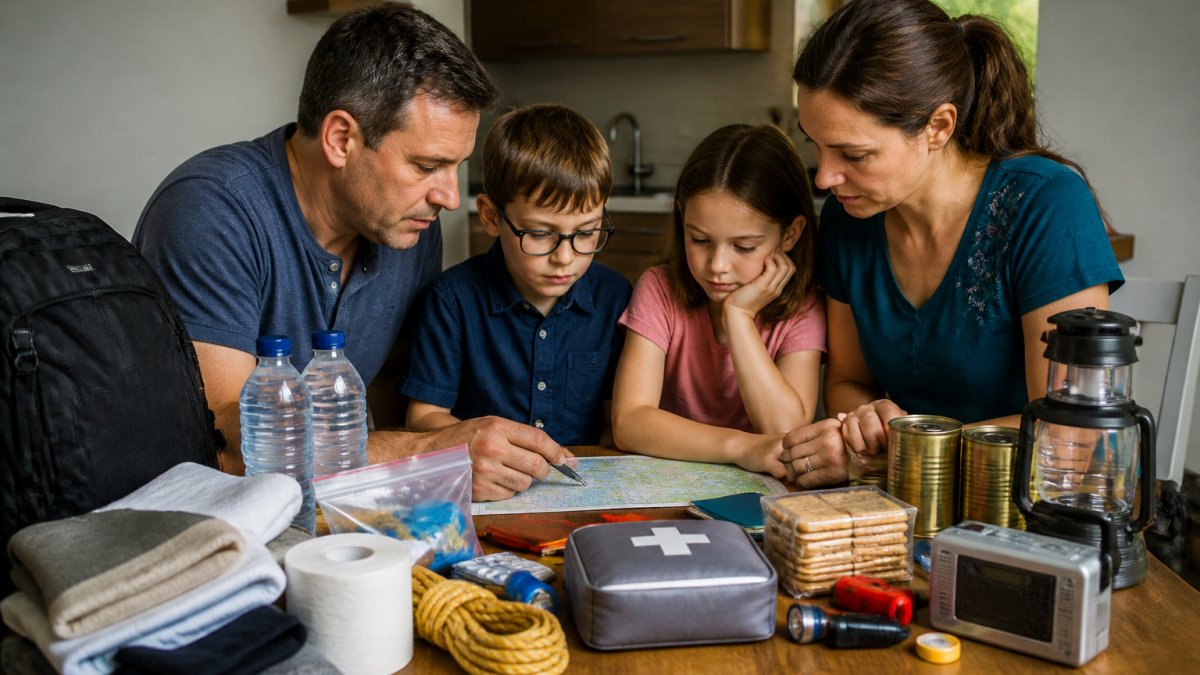
Practical emergency planning for anxious families means treating readiness as a calm, repeatable routine instead of a looming threat. You need a short one-page family plan, a few supplies, and a routine for checking both, and each of the seven steps is small enough to finish in a single sitting.
- United Way's 2026 survey found 84% had not created or tested a household emergency plan.
- Keep conversations with kids honest but bounded: name the hazard, explain the plan, stop there.
- Post your one-page plan on the fridge and put paper copies in go-bags and glove boxes.
- Stock three days of water at one gallon per person per day and a week of medications.
- Run a five-minute reunification drill at dinner and correct answers gently.
Table of Contents
- Why Calm Emergency Planning Beats Fear-Based Preparation
- How to Talk to Kids About Disasters Without Spreading Fear
- Build Your Family Emergency Plan Template Together
- Your Emergency Preparedness Checklist for Families
- Planning for Specific Emergencies and Local Hazards
- Accessible Planning for Neurodivergent Kids, Disabilities, and Medical Needs
- Use a 3-Minute Readiness Diagnostic to Find Your Gaps
- Take the 3-Minute Scan and Start With One Step
- Frequently Asked Questions
Why Calm Emergency Planning Beats Fear-Based Preparation
Practical emergency planning for anxious families flips the script: it treats readiness as a calm, repeatable routine instead of a looming threat.
The stakes are real. United Way's 2026 Preparedness Survey snapshot found that 60% of respondents fear disasters could affect their household. Yet only 15% felt very prepared, 84% had not created or tested a household emergency plan, and 65% had not assembled an emergency kit.
At FlintReady, we focus on operational preparedness rather than fearmongering. You do not need a bunker or a garage full of gear. You need a short plan, a few supplies, and a routine for checking both.
Below, we walk through seven calm steps. Each one is small enough to finish in a single sitting.
How to Talk to Kids About Disasters Without Spreading Fear
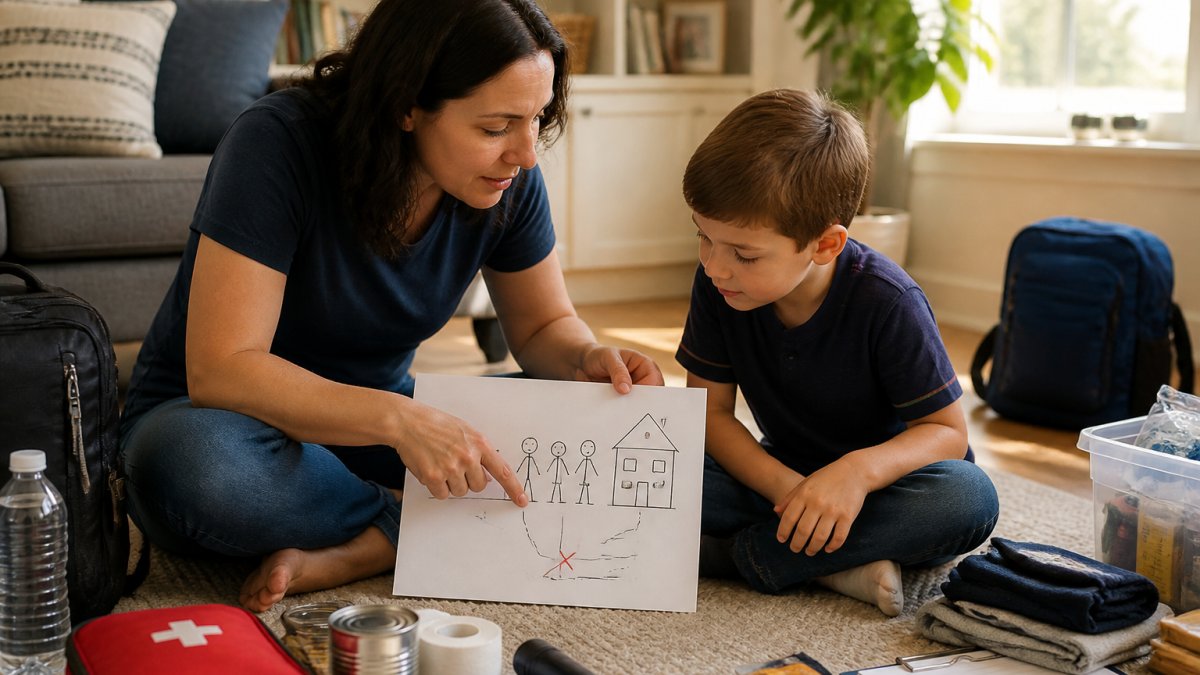
Keep the conversation honest but bounded. Name the hazard, explain the plan, and stop there.
Age-Appropriate Conversations That Reassure
The right level of detail depends on the child's age.
- Ages 3-5: Keep it to one sentence. "If the lights go out, we have a flashlight and we stay together."
- Ages 6-9: Explain the steps. Walk them through the meeting place and the drill.
- Ages 10-13: Give them a job. A small role, like grabbing the flashlight, builds confidence.
- Teens: Talk through the reasoning. Teens respond better to logic than reassurance.
A common mistake is over-explaining. More detail does not equal more safety. It often equals more worry.
Build Your Family Emergency Plan Template Together
A family emergency plan template is a one-page document that lists your meeting places, contacts, evacuation routes, and roles.
Start with these sections:
- Household names and phone numbers
- Two meeting places: one near home, one outside the neighborhood
- An out-of-area contact
- Primary and alternate evacuation routes
- Who grabs what, and who helps whom
- School, childcare, and workplace release procedures
- Backup pickup people and their contact details
Write it down. Then post a copy on the fridge, photograph it, and tuck a paper copy into each go-bag and each car's glove box. Paper matters because phones die, networks jam, and batteries run out.
For a deeper walkthrough of what makes a family plan actually hold up under stress, see our guide on how to build a family disaster plan that works.
Meeting Places, Out-of-Area Contacts, and Reunification
If caregivers and children are separated, everyone needs to know exactly where to go, who to call, and in what order.
Pick a meeting place everyone can walk to. Then pick a second one outside your immediate area, in case the first is blocked. Walk both with your children on a normal day so the route feels familiar rather than frightening.
Choose an out-of-area contact, ideally someone in another region. Give every family member the contact's name and number on a laminated card, and teach children how to ask a trusted adult to borrow a phone.
A practical template looks like this:
- At school or childcare: Confirm in writing how the facility releases children, who is authorized to pick them up, and where students are held during lockdown or evacuation. Ask whether the facility will shelter in place or release to parents, and how it communicates that decision.
- At work: Each caregiver notes their employer's evacuation assembly point and expected release process. Agree in advance who leaves first if only one adult can reach the children.
- Backup pickup: Name at least two trusted adults who can collect your children if neither caregiver can. Give the school written authorization and give the backup adults a copy of the plan.
- The rendezvous: If home is unreachable, the family meets at the near meeting place first. If that is blocked, everyone moves to the out-of-area meeting place. No one improvises a third location.
- The check-in: Once safe, each person texts or calls the out-of-area contact with location and status. The contact becomes the family's message board and relays information between members.
When cell service fails, your family needs a fallback. Our article on what to do when cell service fails during disaster covers the practical steps.
Your Emergency Preparedness Checklist for Families
An emergency preparedness checklist for families can cover water, food, medication, documents, and communication.
Use this checklist:
- Three days of water, one gallon per person per day
- Three days of non-perishable food
- A week of prescription medications
- Copies of IDs, insurance, and medical records in a waterproof bag
- A battery or hand-crank radio
- Flashlights and spare batteries
- A basic first aid kit
- Cash in small bills
- Pet food, a leash, and a crate
- Phone numbers written on paper, not just saved in a phone
To calculate your household's real target, including pets and hot climates, use our guide on how much emergency water your family needs.
Low-Cost, Phased Supply Building
For a week-by-week structure that scales with your budget, follow our 12-week budget readiness plan.
Planning for Specific Emergencies and Local Hazards
A family in a wildfire zone needs different steps than a family in a flood plain.
Start by naming your local hazards. Ask three questions:
- What has hit this area before?
- What does the local emergency agency warn about most?
- Which hazards give the least warning time?
Then write a short response for each. A power outage plan looks different from an evacuation plan. One means sheltering in place. The other means leaving in minutes. Keep each response to a single index card: trigger, action, meeting place, contact.
Here is how three common hazards translate into concrete family steps:
- Power outage: Designate one flashlight per person and a central battery station. Keep the refrigerator closed to preserve food. If anyone relies on powered medical equipment, confirm a backup power source and register with the local utility's medical priority list where available. Decide now whether a long outage means staying or moving to a relative's home.
- Wildfire or fast-moving storm: Pack go-bags with medications, documents, chargers, and a change of clothes. Keep the car fueled above half a tank. Identify two evacuation routes and drive both on a normal day. Assign one adult to children and pets, and one to documents and medications.
- Flood: Know whether your route crosses low-lying roads, and identify a higher alternate. Never drive through standing water (the WHO). Move important documents and medications to an upper floor or a waterproof container before the season, not during the warning.
Evacuation routes deserve special attention. Map your primary route and at least one alternate route. Drive both on a normal day so the turns feel familiar. For children, narrate the route calmly: "This is the road we take if we ever need to leave quickly. See the library? That is our first turn."
Finally, put a maintenance rhythm in place so the plan does not decay.
Accessible Planning for Neurodivergent Kids, Disabilities, and Medical Needs
Build these adjustments into your plan:
- Sensory needs: Pack noise-canceling headphones, a comfort item, and a familiar snack.
- Routine and predictability: Write the plan as a picture schedule for younger or nonverbal children.
- Medical devices: List every device, its power source, and a backup plan. Note charging needs during outages.
- Medication continuity: Keep a written medication list and a week of doses ready to travel.
- Mobility and older adults: Assign a specific person to assist each household member who needs help.
- Pets: Include pet food, a crate, a leash, and a plan for restroom access and sanitation if you shelter away from home.
Researchers publishing in the National Library of Medicine's PubMed Central describe household emergency planning as a fundamental, low-cost way to prepare for disasters. Low-cost matters here. Most accessibility adjustments cost little. They just require thinking ahead.
Use a 3-Minute Readiness Diagnostic to Find Your Gaps
Our 3-minute readiness diagnostic produces a personalized, prioritized fix list.
Here is a simple scan you can run right now:
| Area | Question | If No, Fix First |
|---|---|---|
| Water | Do you have 3 days of water per person? | Buy one case this week |
| Food | Do you have 3 days of food? | Add shelf-stable basics |
| Medication | Do you have a week of doses? | Request refills early |
| Contacts | Is there a written out-of-area contact? | Pick one today |
| Meeting place | Does everyone know two places? | Choose and post them |
| Routes | Have you driven your alternate route? | Drive it this weekend |
Score each row yes or no. The first "no" is your starting point.
Take the 3-Minute Scan and Start With One Step
FlintReady provides a three-minute readiness diagnostic, live national threat monitoring, and field guides for common events like power outages and storms. The platform was designed by a former U.S. Army Geospatial Engineer.
Frequently Asked Questions
How do I talk to my children about emergency preparedness without scaring them?
Keep the conversation short, calm, and focused on what your family will do rather than what could go wrong. Explain the plan in plain language, let your child ask questions, and practice together so the steps feel familiar. United Way's 2026 Preparedness Survey found 84% of respondents had not created or tested a household emergency plan. Reassure children that the plan exists so everyone knows what to do, not because something bad is certain to happen.
What are the essential parts of a low-stress family emergency plan?
A workable family emergency plan template covers five basics: a household meeting place, an out-of-area contact, key phone numbers written down, evacuation routes with an alternate route, and a simple practice drill. Keep it to one page and review it together. The goal is familiarity, not perfection.
How often should a family review their emergency plan?
Review your plan every six months and after any major change, such as a move, a new school, a new pet, or a change in a family member's medical needs. Use the review to update phone numbers, check supplies, and run a short practice drill. A quick calendar reminder makes this easy. Regular plan review and plan updates can help keep a plan usable.
Why is a calm, operational approach better than fear-based preparation?
A calm, operational approach breaks readiness into small, specific steps. United Way's 2026 Preparedness Survey found only 15% of respondents felt very prepared and 65% had not assembled an emergency kit.
The hardest part of preparedness is starting, and fear is usually the reason families stall. FlintReady gives you a calm way in: a personalized readiness score, a prioritized fix list, and plain-language field guides. Get started with FlintReady and turn one small step into a household that is actually ready.
