
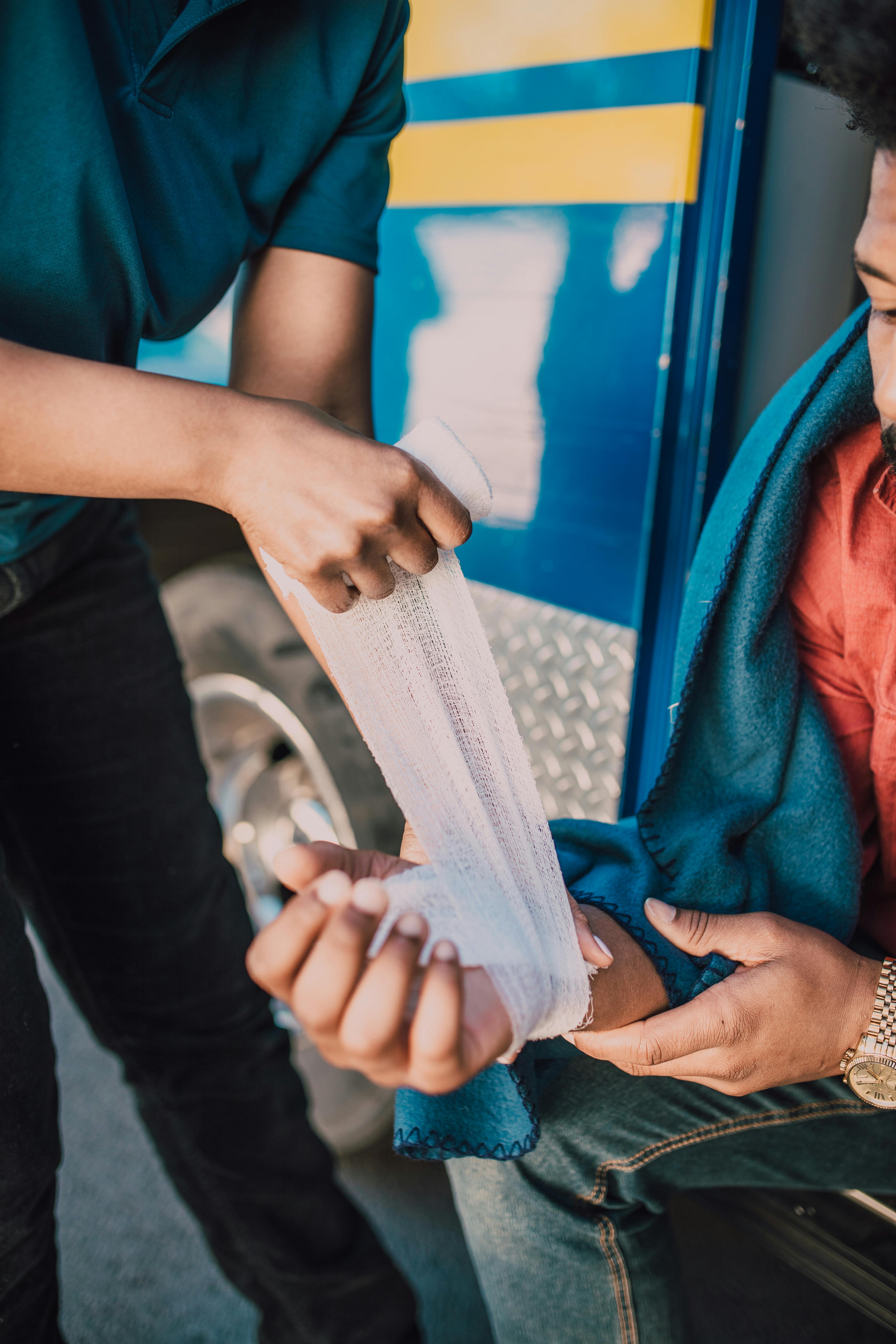
At 2:49 p.m. on April 15, 2013, two bombs detonated near the finish line of the Boston Marathon. In the first seconds after the blast, dozens of people lay on the ground with severed limbs and arterial wounds that would have killed most of them within minutes. The ambulances were on the way. But the ambulances were not going to be fast enough.
What happened next is the most important story in modern emergency preparedness. Bystanders, race medics, off-duty military, and everyday runners did not wait. They stripped off belts. They used medical kits staged at the race. They packed wounds and applied tourniquets in the smoke and chaos. According to research published in JAMA Surgery, at least 27 lives were saved that day by people who were not paramedics. Twenty-seven people who should have died on that pavement walked out of hospitals and went home to their families.
You will not always have warning. The question is whether you will know what to do when the moment arrives.
The Response Time Reality
The national benchmark for urban ambulance response is 8 minutes for life-threatening calls, set by NFPA 1710. The real-world median, according to PMC/National EMS Data from 2018, sits at about 7 minutes in cities. That sounds fast until you look at the trend. Response times have been getting worse every year as EMS systems face staffing shortages, rising call volumes, and hospital diversion backlogs that leave ambulances waiting in bays instead of on the road.
In rural and suburban areas, the numbers are significantly worse. The average rural response is 14 minutes or more. In remote areas, 30 minutes is not unusual. One in ten rural emergency calls waits over 30 minutes for the first unit to arrive.
These are averages. They do not account for traffic, weather, geography, multiple simultaneous incidents, or the 10 minutes it sometimes takes a panicked bystander to accurately describe a location to a dispatcher. In practice, the gap between when someone gets hurt and when trained help touches them is often longer than any of those statistics suggest.
How Fast Injuries Actually Kill
Most people have a vague sense that serious injuries are dangerous. Very few people have a clear picture of the actual timeline, and that lack of clarity is why people hesitate instead of act.
Here is the reality.
A severed femoral artery, the large blood vessel running through the thigh, can cause death in 2 to 5 minutes through blood loss. The femoral artery is not hard to injure. Car accidents, farming equipment, power tools, gunshots, and even bad falls can sever or lacerate it. When it goes, the bleeding is catastrophic. A person can lose consciousness from blood loss in under 2 minutes and be dead shortly after.
Cardiac arrest follows a different but equally unforgiving timeline. Brain damage begins within 4 to 6 minutes of the heart stopping, according to the American Heart Association. After 10 minutes without intervention, the odds of meaningful neurological recovery drop close to zero. The average time for EMS to begin CPR in the United States is approximately 10 to 12 minutes from the point of collapse. That means for most cardiac arrest victims, EMS arrives after the window for a good outcome has already closed.
Neither of these scenarios is rare. Traumatic injury is the leading cause of death in Americans under 46. Cardiac arrest kills over 350,000 Americans outside of hospitals every year.
The 60 Percent Stat That Changes Everything
A study commissioned by the British Red Cross and conducted by the University of Manchester found that 60% of deaths from traumatic injury are potentially preventable if bystanders apply basic first aid before EMS arrives. Not advanced medicine. Not hospital equipment. Direct pressure, wound packing, tourniquet application, and airway management, all skills that a person can learn in a single afternoon.
That 60% figure is not an outlier. Military data, trauma surgery research, and cardiac arrest outcomes all tell the same story. The gap between injury and EMS arrival is where most preventable deaths happen, and the person who can close that gap is whoever is standing closest to the victim when it goes wrong.
That person is you. Not because you are special. Because you are there.
Five Skills You Can Learn Today
None of what follows requires a medical degree. These are skills that Stop the Bleed, the Red Cross, and military trauma programs teach to civilians in a single session. The investment is small. The payoff is everything.
1. Direct Pressure and Wound Packing
The first thing you do with any serious bleed is apply direct, firm pressure. Not a light touch. Not a gentle pat. Both hands, body weight behind them, pressing hard directly on the wound. Most people apply pressure too gently and too briefly and then decide it is not working when they have not actually given it a chance.
For deep, narrow wounds like punctures or gunshot entry points, packing is more effective than surface pressure alone. Wound packing means using gauze, preferably hemostatic gauze like QuikClot, to physically fill the wound cavity and then applying hard direct pressure from the outside. You pack the gauze in tightly, layer by layer, and then compress from above with your full body weight for a minimum of 3 minutes without releasing.
This is uncomfortable to perform and uncomfortable for the patient. Do it anyway. It works.
For wound packing, QuikClot Combat Gauze is the civilian equivalent of what military medics carry. The kaolin-impregnated gauze accelerates clotting and can control bleeding that plain gauze cannot. It runs about $15 and belongs in every trauma kit.
See our full guide on field wound care techniques for step-by-step visual guidance.
2. Tourniquet Application
For limb wounds with arterial bleeding, a tourniquet is the fastest and most reliable intervention. Direct pressure can slow arterial bleeding. A tourniquet stops it.
The Combat Application Tourniquet, known as the CAT, is the gold standard. It is what the U.S. military issues. It is what Stop the Bleed courses use. It is designed for one-handed application, which matters because you may need to tourniquet your own limb. It costs about $30.
A landmark study by Kragh et al., published in the Journal of Trauma in 2009, found that tourniquet application before the onset of shock produced a 90% survival rate in patients with life-threatening limb hemorrhage. Without a tourniquet, survival dropped to near zero in the same scenario. That is not a minor difference. That is the difference between the majority of people living and the majority dying.
The application is straightforward: place the tourniquet 2 to 3 inches above the wound on the limb, tighten the strap as hard as you can by hand, then twist the windlass rod until bleeding stops, and lock it in place. Write the time of application on the strap. Do not remove it until a physician does so in a hospital.
A CAT Gen 7 Tourniquet is smaller than a smartphone. There is no legitimate reason not to have one in your car, your bag, or your home kit. Buy from a reputable supplier. Counterfeit tourniquets exist and fail when you need them most.
For wounds that cannot be tourniqueted, like torso or shoulder injuries, an Israeli Bandage provides secure, sustained pressure that frees your hands. It wraps, compresses, and clips in place without requiring you to hold it down continuously.
3. Hands-Only CPR
The American Heart Association updated its guidance years ago: for adult cardiac arrest, hands-only CPR is as effective as full CPR with rescue breaths, and most bystanders are far more willing to perform it. No mouth-to-mouth required.
The technique is simple. Call 911 first. Then place the heel of one hand on the center of the chest, place the other hand on top, and push hard and fast, aiming for 100 to 120 compressions per minute. The AHA famously notes that the beat of Stayin Alive by the Bee Gees is exactly the right tempo. Push hard enough that the chest compresses at least 2 inches with each stroke. That requires more force than most people expect.
Do not stop until EMS arrives or an AED is available and ready to use. Fatigue is real. If there is another capable bystander, switch off every 2 minutes to maintain quality compressions.
AED devices are now present in most public buildings, airports, gyms, and sports venues. They provide voice instructions and are designed to be used by untrained bystanders. Knowing where the nearest one is in places you frequent is a worthwhile habit.
4. Stop the Bleed Classes
Stop the Bleed is a free, nationally coordinated program developed after the Sandy Hook shooting to train everyday people in hemorrhage control. A course takes about 90 minutes. It covers direct pressure, wound packing, and tourniquet application with hands-on practice using a simulation arm.
Free classes are available in all 50 states. You can find one near you at stopthebleed.org. Many hospitals, fire departments, and community centers host them regularly. There is no cost, no medical background required, and no reason to skip it.
Reading about wound packing and actually doing it on a training pad are different experiences. The training matters. Muscle memory under stress requires repetition, and 90 minutes is enough to build a working foundation.
5. Building a Basic IFAK
An Individual First Aid Kit (IFAK) is a compact trauma kit designed for one purpose: stopping life-threatening bleeding before EMS arrives. Military personnel carry them. So do an increasing number of prepared civilians.
A functional IFAK for civilian use costs $50 to $75 and fits in a belt pouch, a glove box, or a small compartment in a bag. The core components are:
- CAT Tourniquet (~$30) for arterial limb bleeds
- QuikClot Hemostatic Gauze (~$15) for deep wound packing
- Israeli Bandage (~$10) for sustained pressure dressing
- Trauma Shears (~$8) to cut away clothing fast without causing more injury
- Nitrile gloves (a few pairs) to protect yourself and the patient
- Permanent marker to write tourniquet application time
That is it. The entire kit fits in a pouch the size of a paperback book and can be assembled for under $75. Stage one in your vehicle, one at home, and one in any bag you carry regularly if you can. See our full guide on building a wilderness first aid kit for a more comprehensive gear list, and visit our kit-building guide for home and vehicle staging options.
The Boston Marathon Story: What Bystanders Actually Did
The 2013 Boston Marathon bombing is the clearest modern proof of what trained, equipped bystanders can accomplish in the gap before EMS arrives.
In the immediate aftermath of the blasts, the scene was chaos. Smoke, screaming, debris. Dozens of people with blast injuries, severed limbs, and arterial hemorrhage. Official EMS response was fast by any standard, but they were not the first to act. The first to act were the people who were already there.
Marathon medical volunteers, off-duty military personnel, and ordinary race spectators applied improvised and proper tourniquets, packed wounds, and maintained pressure. Some used what they had in medical kits staged for the race. Some used belts and torn clothing. All of them acted without hesitation, and all of them acted before the first ambulance arrived.
The outcome was unprecedented. Despite 264 people being injured in the blasts, including 16 who lost limbs, the death toll from trauma was three. Subsequent research published in JAMA Surgery attributed the low death toll primarily to rapid tourniquet application by bystanders. The study concluded that at least 27 lives were saved by hemorrhage control performed before hospital care began.
That number does not happen without people who acted. It does not happen without at least some of them having the tools and the knowledge to use them correctly under pressure.
You can read more about the skills that made that possible in our field guide to bleeding, burns, and breaks.
Why the Gap Is Getting Worse
EMS systems across the United States are under sustained pressure. Staffing shortages, retirements, burnout from COVID, and declining interest in emergency medicine as a career have left many departments running fewer vehicles than they did five years ago. At the same time, call volumes have increased.
Hospital diversion, where ambulances are turned away from full emergency departments and must drive to the next available facility, adds additional time to responses. In some metro areas, ambulances wait 30 minutes or more in hospital bays to hand off patients, keeping them off the road for calls that are actively waiting.
Rural areas are hardest hit. Many rural EMS services have shifted to volunteer models. When a volunteer crew is not already staged, response means calling volunteers from home, who then drive to the station, get a vehicle, and drive to the scene. That process realistically takes 20 to 30 minutes in many rural counties.
None of this is criticism of EMS professionals, who are exceptional people doing difficult work under impossible conditions. It is a clear-eyed picture of the system as it exists. The gap between injury and professional medical care is a structural feature of emergency response, not an anomaly. Planning around it is not pessimism. It is preparation.
You Are the First Responder
The phrase "first responder" has become synonymous with EMS, firefighters, and police. But the actual first responder to any emergency is whoever is standing there when it happens. That is almost always a civilian with no training and no equipment.
That does not have to be true for you.
A 90-minute Stop the Bleed class is free. A CAT tourniquet costs $30. A basic IFAK runs $50 to $75. The skills to perform hands-only CPR can be learned in 20 minutes from any AHA training video. These are not large investments. They are the minimum viable preparation for a scenario that kills over 150,000 Americans in preventable traumatic deaths every year.
The ambulance is coming. But the ambulance is not going to be there in the first two minutes. You are. Learn what to do with those two minutes.
Free Preparedness Checklists
Printable checklists for your go-bag, home kit, car kit, and more. Every item, every category, ready to check off.
Download Free ChecklistsWant the Full Plan?
The FlintReady Field Manual covers 35+ emergency scenarios with step-by-step action plans, gear lists, and family communication templates. One document, every disaster.
Affiliate disclosure: Some links in this article are Amazon affiliate links. If you purchase through these links, we earn a small commission at no extra cost to you. We only recommend products we have vetted and believe in. This helps support FlintReady at no extra cost to you.
- National EMS Data, PMC (2018) — EMS response time benchmarks and rural/urban gaps
- NFPA 1710 — Standard for the Organization and Deployment of Fire Suppression, EMS Operations
- Kragh JF et al. (2009). Survival With Emergency Tourniquet Use to Stop Bleeding in Major Limb Trauma. Journal of Trauma, 67(1):133-139
- Rhee PM et al. (2016). Tourniquet use in the civilian prehospital setting. JAMA Surgery
- University of Manchester / British Red Cross (2014) — First Aid Can Save Lives study: 60% of traumatic injury deaths preventable with bystander first aid
- American Heart Association — Hands-Only CPR guidelines and cardiac arrest survival data