
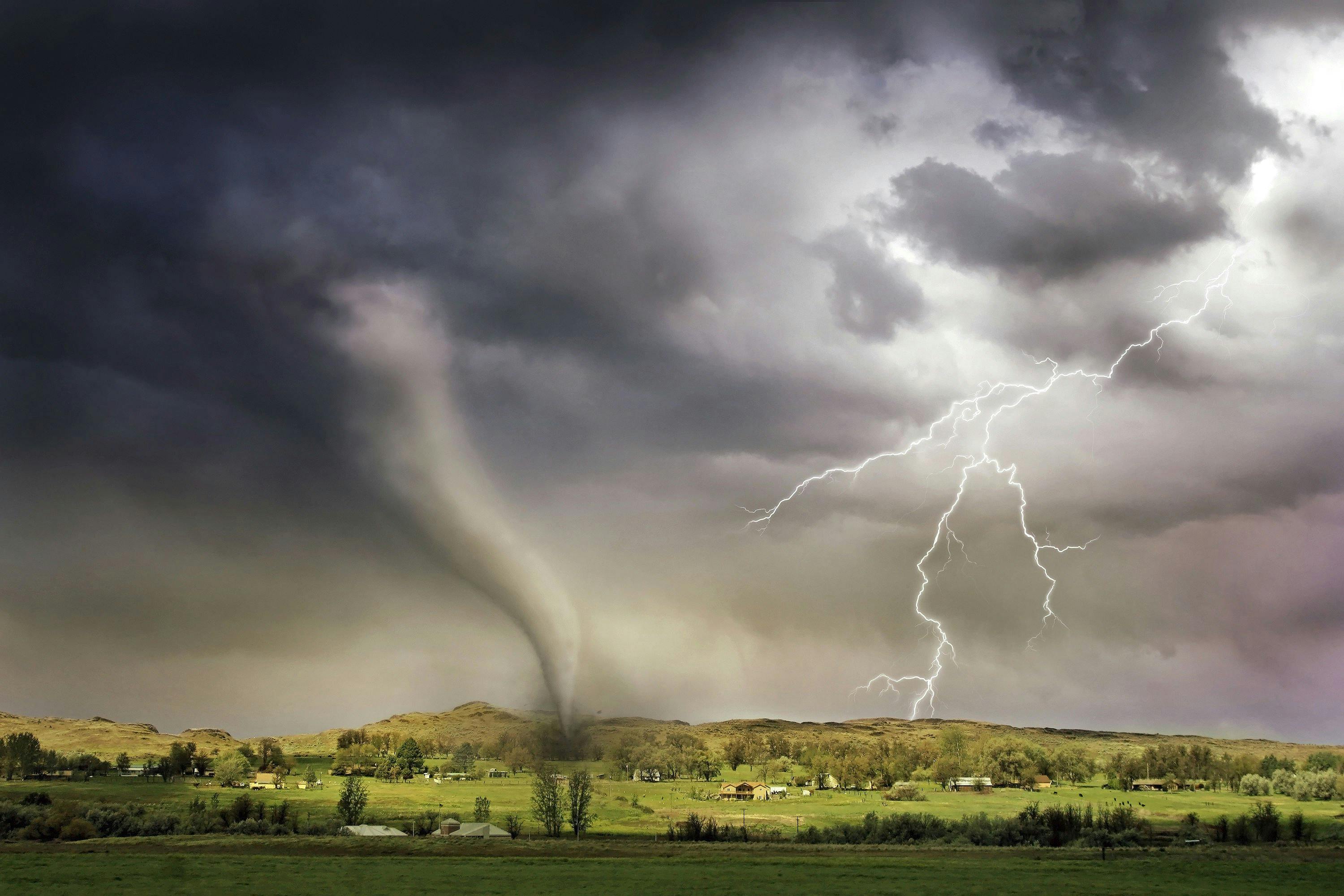
Fourteen tornadoes tore through the Midwest in the first two weeks of April 2026. An EF-1 touched down in Van Buren Township, Michigan on April 4th and 5th. Multiple tornadoes ripped through Illinois and Indiana on April 2nd and 3rd. AccuWeather is already calling this a "front-loaded tornado season," and the peak months have not even started yet.
That alone should get your attention. But here is the part that changes the math completely.
FEMA has lost roughly a third of its workforce. Eleven billion dollars in state disaster payments have been canceled. If a major tornado event hits your area this spring, the federal cavalry may not be coming. At least not on the timeline you are used to.
April 13 through 17 is Severe Weather Awareness Week. That is not a coincidence. This is the window to get your kit together, confirm your shelter plan, and make sure your family knows what to do when the sirens go off.
This guide walks you through a complete 72-hour tornado kit, category by category. No filler, no guesswork. If you prefer video, watch the full breakdown on YouTube. If you want a printable version, grab our free tornado checklist.
Watch vs. Warning: Know the Difference
This sounds basic, but people confuse these every single year, and the confusion costs lives.
- Tornado Watch: Conditions are favorable for tornadoes. Stay alert, keep your phone on, and know where your shelter is. You still have time to prepare.
- Tornado Warning: A tornado has been spotted or detected on radar. Take shelter immediately. This is not a suggestion. Move now.
When you hear "watch," that is your signal to charge your devices, fill water containers, and gather your kit. When you hear "warning," you grab the kit and go to shelter. No hesitation.
Where to Shelter
Your shelter location matters more than your gear. The best kit in the world will not save you if you are standing next to a window when an EF-3 hits.
- Best option: A basement or storm cellar. Get under a sturdy table or workbench. Stay away from windows.
- No basement: Go to the lowest floor, interior room. A bathroom, closet, or hallway with no windows. Put as many walls between you and the outside as possible.
- In an apartment: Same rules. Lowest floor, interior room. If you are on the top floor, get down. Knock on a neighbor's door if you have to.
- In a mobile home: Get out. Period. Mobile homes are not safe in a tornado regardless of tie-downs. Identify a nearby sturdy building or community shelter before the season starts.
- In a car: Do not try to outrun a tornado. If you can see it and it is not moving left or right on the horizon, it is coming toward you. Get to a sturdy building. If none is available, get out of the car, find the lowest ground you can (a ditch), lie flat and cover your head.
Cover yourself with a mattress, heavy blankets, or sleeping bags for protection against debris. Helmets are not overkill. Bike helmets, motorcycle helmets, hard hats, whatever you have. Head injuries are one of the leading causes of tornado fatalities.
Your 72-Hour Tornado Kit, Category by Category
Here is what goes in the kit. Everything is organized by priority. If you can only afford to do one category this week, start with water.
1. Water
One gallon per person per day. That is the minimum. For a family of four over 72 hours, you need 12 gallons. Store-bought bottled water is the easiest option. Just buy it and put it in your shelter area.
For backup filtration, the Sawyer Squeeze is the gold standard for portable water filters. It handles bacteria, protozoa, and particulates down to 0.1 microns, and it weighs almost nothing.
Sawyer Squeeze Water Filter (~$35) on Amazon
Also keep a few water purification tablets as a tertiary backup. They weigh nothing and last for years.
2. Shelter and Warmth
After a tornado, your house might not be livable. Even if the structure survives, you could lose power and heat for days.
- Mylar emergency blankets (pack at least 2 per person)
- A sleeping bag or heavy blanket per person
- A blue tarp for rain protection or temporary roof patching
- Work gloves for debris handling
- Sturdy shoes (not flip-flops, not sandals)
Pre-stage shoes and a change of clothes near your shelter area. After a tornado, there will be broken glass, nails, and splintered wood everywhere. You need hard-soled shoes immediately.
3. Food
You need 72 hours of food that requires no refrigeration and minimal cooking. Think calorie-dense, shelf-stable, and easy to eat under stress.
- Peanut butter (high calorie, no cooking needed)
- Canned chicken or tuna (protein you can eat straight from the can)
- Granola bars or energy bars
- Crackers or hard bread
- Dried fruit and nuts
- A manual can opener (do not rely on an electric one)
Rotate your food supply every six months. Mark the date you packed it and check it when the clocks change.
4. Communication and Light
When the power goes out, you lose lighting, your phone charger, and access to weather updates. A hand-crank emergency radio solves two of those problems at once. It picks up NOAA weather alerts and charges your phone in a pinch.
Hand-Crank Emergency Radio (~$45) on Amazon
For light, skip the candles in a post-tornado scenario. There may be gas leaks. Use a headlamp instead. It keeps your hands free for navigating debris, carrying kids, or administering first aid.
- Hand-crank or battery-powered NOAA radio
- Headlamp plus spare batteries
- Portable power bank (fully charged)
- Whistle (in case you are trapped under debris)
5. First Aid
Tornado injuries are brutal. Flying debris causes lacerations, puncture wounds, broken bones, and head trauma. Your first aid kit needs to go beyond band-aids.
- Standard first aid kit (bandages, gauze, antiseptic, medical tape)
- Tourniquet (for severe bleeding, this is not optional)
- Prescription medications (7-day supply minimum)
- Pain relievers (ibuprofen, acetaminophen)
- Dust masks or N95s (post-tornado air is full of insulation, drywall, and mold)
A tourniquet can stop a life-threatening bleed in seconds. If a piece of debris severs an artery, you will not have time to drive to a hospital, especially if roads are blocked.
CAT Tourniquet (~$30) on Amazon
Learn how to use it before you need it. A tourniquet you cannot apply under stress is just a piece of nylon.
6. Documents and Cash
After a tornado, you may need to prove who you are, file insurance claims, access bank accounts, or apply for disaster assistance. If your documents are buried under a collapsed roof, that gets very complicated very fast.
- Copies of IDs (driver's license, passport)
- Insurance policy numbers and agent contact info
- Medical records and prescription list
- Emergency contact list (written, not just in your phone)
- At least $200 in small bills (ATMs and card readers will be down)
Put everything in a waterproof bag or document pouch. Store it with your kit so you can grab it in seconds.
The FEMA Problem
This is not political commentary. It is a planning reality. FEMA has lost roughly a third of its workforce. Eleven billion dollars in state disaster payments have been cut. Whether those decisions were right or wrong is irrelevant to your planning. What matters is the outcome: federal disaster response will be slower and thinner than what you are used to.
That means the gap between when a tornado hits and when organized help arrives is going to be longer in 2026. Your 72-hour kit is not a "nice to have" anymore. It is the bridge that keeps your family fed, hydrated, and safe until infrastructure catches up.
If you only took 15 minutes from FEMA showing up last time, imagine what 48 or 72 hours looks like without outside help. That is the scenario you are planning for now.
Start Today, Not Tomorrow
You do not need to build the perfect kit in one shopping trip. Start with water and a flashlight today. Add food and first aid next week. Build your document pouch this weekend. In two weeks, you will have a complete 72-hour tornado kit for under $150.
The 2026 tornado season is not waiting for you to feel ready. Fourteen tornadoes have already hit. The peak is still months away.
Free Tornado Checklist
A printable, category-by-category tornado kit checklist. Covers shelter, water, food, comms, first aid, and documents.
Download the Free ChecklistWant the Full Plan?
The FlintReady Field Manual covers 35+ emergency scenarios with step-by-step action plans, gear lists, and family communication templates. One document, every disaster.
This post contains Amazon affiliate links. If you buy through our links, we may earn a small commission at no extra cost to you. We only recommend products we actually use or have thoroughly vetted. This helps support FlintReady.