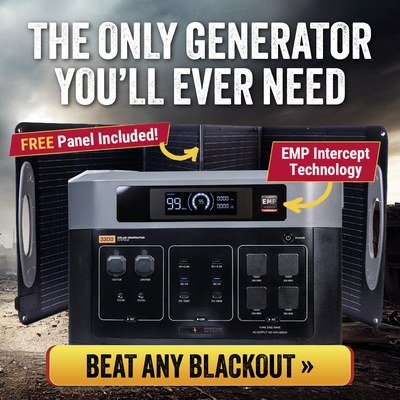
Portable Solar Generator for Apartments
Portable solar generators are the right choice for apartment emergency power — no CO risk, no noise, no fumes, no fuel storage, and they recharge from the sun. This is the complete guide: why portable solar wins for apartments, how to size the system, recommended models by budget, efficient usage for extended runtime, and the complete kit setup.
- 01 WHY PORTABLEThe right solar for apartments
- 02 SIZING THE SYSTEMWatts and watt-hours
- 03 RECOMMENDED UNITSSpecific models ranked
- 04 USING IT WISELYExtending runtime
- 05 COMPLETE SOLAR KITSystem, not component
The Rule of 3s
Portable solar generators (also called portable power stations) are lithium battery banks with built-in inverters and multiple outputs, usually paired with folding solar panels for recharging. They produce grid-quality AC power without fumes, noise, or fuel — perfect for apartments where gas generators are banned, dangerous, or illegal.
Unlike gas generators, you can use them indoors. Unlike home battery backups, you can carry them. For apartment emergency power, they are the right choice: no CO, no noise, no fumes, no fuel storage, and they charge from the sun.
Why portable solar wins for apartments
- ☐ No CO — safe to use indoors (gas generators kill in apartments)
- ☐ No noise — no generator hum announcing "I have power"
- ☐ No fumes or exhaust in enclosed spaces
- ☐ No fuel storage (gas generators need 5+ gallons nearby)
- ☐ No HOA or landlord restrictions (most apartments ban gas generators)
- ☐ Rechargeable from the sun, wall, or car
- ☐ Portable: carry to different rooms, move to where needed
- ☐ Powers essential devices: phone, headlamp, medical equipment, small appliances
Solar generators are rated by capacity (watt-hours, Wh) and output (watts, W). Capacity is how much energy they hold. Output is how fast they can deliver it. For apartments, the sweet spot is 500-1500 Wh capacity with 1000W output — enough to run essentials for several days without recharging.
Sizing for apartments
- ☐ SMALL (300-500 Wh, 300-600W) — phone/laptop/small electronics only
- ☐ MEDIUM (500-1000 Wh, 500-1000W) — add small fridge, some appliances → Buy
- ☐ LARGE (1500+ Wh, 1500+W) — run small fridge, mini-fridge, CPAP overnight → Buy
- ☐ X-LARGE (3000+ Wh, 3000+W) — whole apartment essentials for days
- ☐ For apartments, 1000 Wh is the sweet spot for cost/capability
- ☐ Solar input: match the panel wattage to your station (200W panel minimum for reasonable recharge)
- ☐ Calculate your needs: list essential devices × hours × watts
- ☐ Example: phone (5W × 2 hours = 10 Wh), headlamp (3W × 4 hours = 12 Wh), laptop (45W × 3 hours = 135 Wh), CPAP (50W × 8 hours = 400 Wh), fridge (100W × 4 hours of runtime = 400 Wh). Total: ~960 Wh/day.
The portable solar market has exploded. Major brands: Jackery, Bluetti, EcoFlow, Goal Zero, Anker. Each has strong models in different capacity tiers. Here are the current top picks by use case.
Recommended models
- ☐ BUDGET — Jackery Explorer 300 (300 Wh, $300): for phones/laptops/small stuff → Buy
- ☐ MID-TIER — Jackery Explorer 1000 Pro (1002 Wh, $800): versatile, reliable → Buy
- ☐ MID-TIER — EcoFlow River 2 Max (512 Wh, $450): fast charging, compact → Buy
- ☐ HIGH-END — Bluetti AC180 (1152 Wh, $900): UPS function, long lifespan → Buy
- ☐ HIGH-END — EcoFlow Delta 2 (1024 Wh, $999): fast recharge, expandable → Buy
- ☐ OVERKILL — EcoFlow Delta Pro (3600 Wh, $3000+): whole-apartment runtime
- ☐ AVOID: "Solar generator" kits under $200 (usually tiny capacity, poor inverters)
- ☐ AVOID: Lead-acid based "power boxes" (heavy, short cycle life, outdated)
Portable solar generators are amazing, but capacity is finite. Smart usage extends runtime dramatically. The rules: charge during the day, run essentials only, avoid high-draw devices when possible, keep the generator cool.
Efficient usage
- ☐ Charge during the day when solar is producing — discharge at night
- ☐ Run only ESSENTIAL devices (phones, lights, medical)
- ☐ Avoid high-draw devices (microwaves, hair dryers, heaters) — they drain fast
- ☐ Use LED lights only — 90% less power than incandescent
- ☐ Use the DC/USB outputs when possible — more efficient than inverting to AC
- ☐ Turn off devices when not actively needed (standby power adds up)
- ☐ Keep the generator cool — heat reduces battery lifespan
- ☐ Monitor the battery level — do not drain below 20% if possible
- ☐ Plan your day: "I will charge phone in the morning, run fridge 4 hours midday, and have lights at night"
A complete apartment solar setup includes: the power station, solar panels, cables, inverter extensions, a few essential appliances tested to work with it, and a plan for deployment.
Complete kit
- ☐ Portable power station (Jackery 1000 Pro or similar)
- ☐ 200W folding solar panel → Buy
- ☐ Extension cords + power strips (surge protected)
- ☐ Quality USB cables for phones and small electronics
- ☐ LED lamps + headlamps (use battery power, not AC)
- ☐ Tested list of which appliances work (fridge, microwave, etc.)
- ☐ Small fan for hot weather
- ☐ Charging station organization (cable management)
- ☐ Backup AAA/AA battery chargers
- ☐ Weather-resistant cover for the solar panel
- ☐ Carrying case or handle for portability
This free checklist covers the essentials. The Complete Prep Bundle covers everything after — scenario playbooks, 12 skill tracks, a diagnostic quiz, printable templates, and lifetime Premium access.
- 📖 The FlintReady Field Manual (140+ pages)
- 📋 5 Printable Checklists
- 📓 4 Scenario Playbooks (Hurricane, Blackout, Water Cut, Vehicle)
- 🗂️ Family Plan + Pantry Rotation Templates
- ⭐ Premium Lifetime Access
Affiliate links throughout. At no cost to you, FlintReady earns a small commission on Amazon orders, which keeps the site and checklist free. flintready.com/disclosure