Apartment prepping has one constraint that house-dwellers don't face: space. You can't dedicate a whole room to food storage. But that doesn't mean you can't be prepared — it just means you have to be smarter about what you store and how you store it.
This guide covers the best emergency food for small apartments: high-calorie, shelf-stable, compact, and actually edible.
The Rules of Apartment Food Storage
Before you start buying, set your constraints:
- Space: You're working with under-bed space, closet shelves, or a small pantry corner
- Budget: Build incrementally — you don't need to spend $500 at once
- Rotation: Store what you eat, eat what you store — don't buy specialty food that sits untouched
- No cooking dependency: Focus on foods that need minimal or no cooking if your stove fails
Best Emergency Foods for Apartments
1. Canned Goods: The Foundation
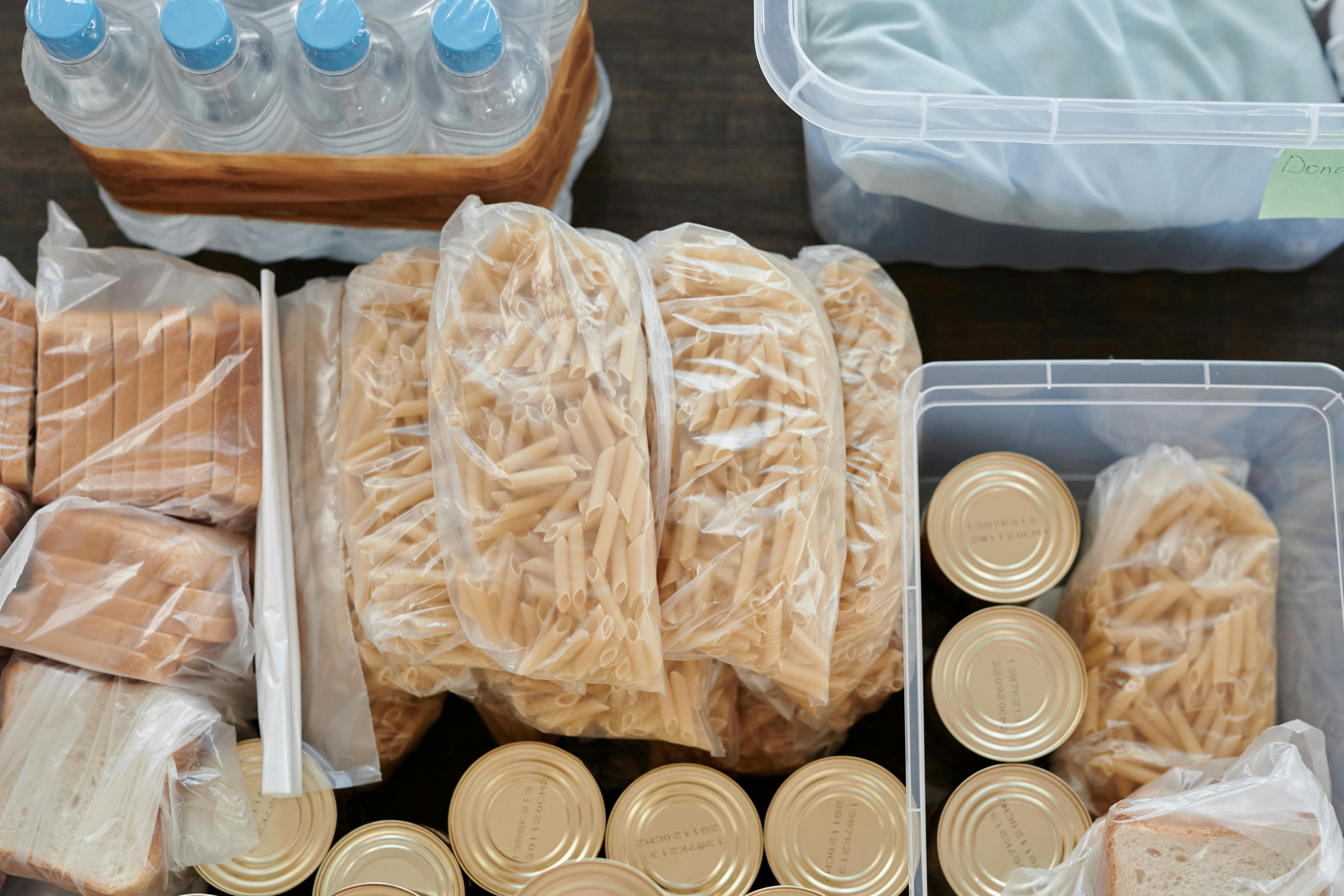
Canned food is the backbone of any apartment emergency supply. It doesn't need refrigeration, lasts 2–5 years, and requires no special preparation. The best options:
- Canned beans (black, kidney, chickpeas) — protein, fiber, long shelf life
- Canned tuna and chicken — affordable protein, eatable straight from the can
- Canned vegetables (corn, green beans, tomatoes) — vitamins, variety
- Canned soups — comfort food with water content, no extra cooking needed
Buy one extra can every shopping trip until you've got a 2-week supply. Spend nothing extra — just shift your normal grocery budget.
2. Peanut Butter: Calorie-Dense and Shelf-Stable
A single large jar of peanut butter contains around 2,800+ calories and lasts 1–2 years. It requires no cooking, no refrigeration, and pairs with anything. Buy the largest jars you can find and rotate them. This is one of the highest calorie-per-dollar, calorie-per-cubic-inch foods available.
3. Rice and Oats (Vacuum-Sealed)
Dry rice and oats are incredibly compact storage options. A 5-pound bag of rice takes up minimal space but provides dozens of servings. Buy Mylar bags and oxygen absorbers to extend shelf life to 25+ years. Even without special sealing, a factory-sealed original bag lasts 2–3 years in a cool, dark spot.
4. Freeze-Dried Meals: The Space Saver
If you're truly space-constrained, freeze-dried meal pouches pack a lot of calories into minimal space. Brands like Mountain House and Augason Farms are popular in the prepper community. The trade-off: they're expensive per serving. Use them as a supplement to your core canned goods, not a replacement.
5. Crackers, Granola Bars, and Energy Bars
No-cook snacks are critical for the first 24–48 hours of any emergency when you just need calories fast. Emergency calorie bars (like Mayday or SOS) pack 3,600 calories into a single foil-sealed bar. Regular granola bars from a warehouse store also work well at a fraction of the price.
6. Instant Coffee and Comfort Foods
This sounds frivolous until you're on day 3 of a blackout and morale is sinking. Familiar flavors matter enormously during stress. Instant coffee, tea bags, hot cocoa mix — store what you actually drink. A $5 investment in familiar comfort can make a real difference to your family's mental state.
How to Store It All in a Small Apartment
Under-Bed Storage Bins
Flat, lidded storage bins slide under a queen bed and can hold 60–80 cans comfortably. This is dead space most apartments never use. Label the bins by category and keep a running inventory.
Closet Shelf Risers
Stackable shelf organizers double your closet vertical space. Dedicate one closet shelf to emergency food storage — you'd be surprised how much fits in a 2-foot-wide section.
A Dedicated Pantry Drawer
If you have kitchen drawers, designate one as the "emergency drawer." Keep high-calorie, no-cook items here: peanut butter, crackers, canned goods that fit, granola bars. It stays organized and you always know where to look.
The 72-Hour Apartment Meal Plan
Here's an example of what 3 days of emergency eating looks like for one person, using only shelf-stable foods:
- Day 1: Granola bar + peanut butter crackers + canned chicken soup + trail mix
- Day 2: Instant oatmeal + canned tuna on crackers + peanut butter + canned corn
- Day 3: Calorie bar + canned beans + peanut butter crackers + canned fruit
That's roughly 2,000 calories per day with zero cooking required. Total storage volume: about the size of a large backpack.
→ Explore more food storage strategies in the Food & Foraging Skill Track
You don't need a pantry to be prepared. You need a system — and 3 square feet of closet space.
🏠 Apartment Prepper? We've Got You.
Download our free 72-hour checklist optimized for small spaces — everything you need, nothing you don't.
Get Free Checklist →Affiliate disclosure: Some links in this article are Amazon affiliate links (tag: sustainab0b2b-20). If you purchase through these links, we earn a small commission at no extra cost to you.
This post contains affiliate links. If you buy through our links, we may earn a commission — at no extra cost to you. This helps support FlintReady!